My prediction was right: Liam Hemsworth didn’t need to be Henry Cavill. When I wrote about Witcher Season 4 before it aired, I argued that Baptism of Fire required a completely different Geralt – one who learns to rely on his team instead of dominating every scene. Now that the season’s out, I can confirm: the ensemble approach largely works.
But Netflix didn’t just adapt Baptism of Fire. They pulled heavily from The Tower of the Swallow for Ciri’s storyline, invented an entirely new arc for Yennefer, and compressed timelines in ways that both helped and hurt the pacing. If you’re wondering how faithful Season 4 is to the books – or whether you should read them first – this breakdown covers everything.
Here’s what the books reveal, what Netflix changed, and whether it actually worked.
What Book is Witcher Season 4 Based On? Baptism of Fire Explained
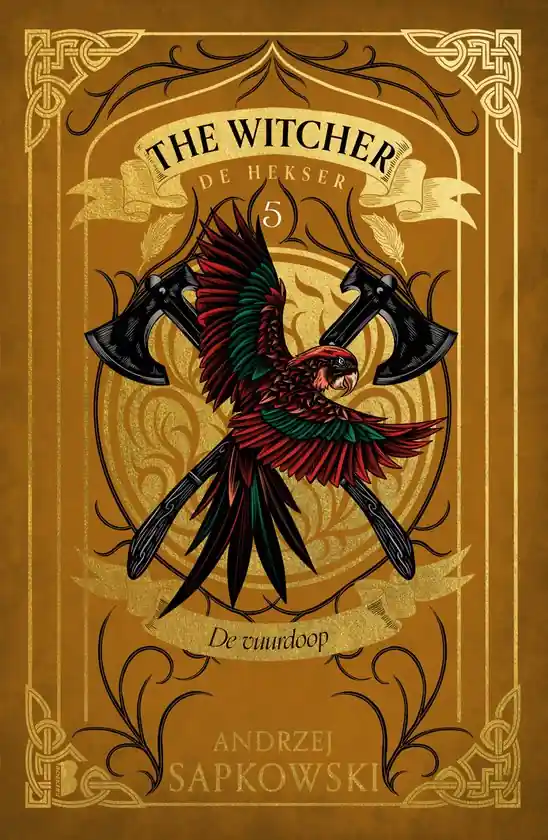
Witcher Season 4 adapts Baptism of Fire by Andrzej Sapkowski, the third novel in the main Witcher saga. And this isn’t just another season. This is where the story fundamentally shifts. If previous seasons were about Geralt as a solo operator, Baptism of Fire is where he becomes the reluctant leader of a hilariously dysfunctional team: his fellowship, in classic fantasy language. This structural shift is the entire reason the Liam Hemsworthcasting might not just work, but could actually be a blessing in disguise.
Why Baptism of Fire Requires Different Acting Than Previous Seasons
The first pattern you’ll notice in Baptism of Fire is that Geralt can’t handle things alone anymore. And I don’t just mean he’s injured from the Thanedd explosion (though that’s part of it). He’s physically compromised in ways we haven’t seen before, requiring the team just to travel safely.
But the real shift is deeper. Throughout the book, Geralt makes declarations about what the group should do, and his companions decide whether to actually follow him or not. In Chapter 2, he refuses to let Cahir join despite practical arguments from Jaskier and Milva. It’s purely emotional, trauma-driven judgement. The team ends up navigating war zones while Geralt processes his mistake. Later events prove Cahir would’ve been useful from the start.
This pattern repeats constantly. Geralt suggests something, the group discusses it, and sometimes they just don’t do what he says. His authority isn’t automatic, but has to be earned through actual reasoning, not commanding presence. That’s fundamentally different from “Geralt walks in, everyone defers to him.”
How Geralt’s Role Differs in Baptism of Fire vs The Witcher Netflix
The Netflix show spent three seasons establishing Geralt as the expert on anything – monsters, combat, strategy. He’s the guy with the answers. Baptism of Fire systematically undercuts that archetype.
When the group discusses sword quality and metallurgy, Zoltán the dwarf and Percival the gnome lecture Geralt about it. His supposed area of expertise as a Witcher? He listens and learns. He doesn’t know everything, and Sapkowski doesn’t pretend he does.
When they need to navigate through dangerous territory, Milva takes the lead. Her tracking skills guide them through war zones while Geralt follows someone else’s expertise. She makes the tactical route calls. Geralt’s role is to trust her judgement.
When they need medical knowledge or philosophical insight, Regis provides it. He anchors entire scenes through wisdom and understanding that Geralt simply doesn’t possess. And the book gives him space to do this without Geralt swooping in to solve things.
The Netflix adaptation would need to embrace this specialist structure completely. Geralt coordinates, but he doesn’t dominate every scene or provide every answer. That’s a massive shift from how the show has functioned so far.
The “Lone Wolf” Myth Gets Destroyed (Chapter 5 Evidence)
And then comes Chapter 5, where Sapkowski stops being subtle and just explicitly says it. After Geralt tries to handle something alone, his entire team gangs up on him. And the scene is played for comedy at Geralt’s expense!
Jaskier goes first, pointing out that Geralt’s been completely useless – the group fed him, not the other way around. That soup they ate? “The result of cooperation, the collective effort of a brotherhood.” Geralt contributed nothing.
Then Milva tears into him even harder. She mocks his “leave me alone, I’ll do it myself” attitude and shows why she’s one of my favorite characters in this book: “Wolves don’t hunt alone! Never! A lone wolf doesn’t exist – it’s a fairy tale that only city folk believe!”
The book explicitly calls out the “lone wolf Witcher” concept as nonsense. Not subtext, not implication. The actual text says it’s a myth that Geralt doesn’t understand. Geralt is not a wise leader. This scene shows his friends lecturing him about basic survival logic while making fun of him. And it works because the book has spent chapters showing why they’re right.
For Liam Hemsworth, this is actually perfect. He doesn’t need to play stoic competence or commanding authority. He needs to play a guy learning – often the hard way – that he genuinely needs these people to survive. That’s a completely different acting challenge than what Cavill had been doing.
If you’re curious about where this book fits in the full series, check out my complete Witcher reading order guide!
Witcher Season 4 Book Differences: What Netflix Changed
Season 4 doesn’t adapt just one book; it combines Baptism of Fire (book 3) and The Tower of the Swallow (book 4), compressing two novels’ worth of storylines into a single season. Here’s how each character’s arc compares to the source material.
Geralt’s Storyline: Mostly Faithful (With Caveats)
Book source: Baptism of Fire
The Hanza dynamics work well on screen. Geralt traveling with Dandelion, Milva, Regis, Cahir, and eventually joining forces with Zoltan’s dwarves translates nicely to television. The ensemble structure I predicted would save the season? It does. Laurence Fishburne’s Regis gets real scenes, real wisdom, and real presence – exactly what the role needed.
What Netflix got right:
- The company formation feels organic, not forced
- Regis functions as the intellectual and moral anchor
- The banter and group dynamics capture the book’s tone
- Queen Meve’s knighting scene made it in
Where it diverges:
Geralt gets more “badass” solo moments than the books justify. In Baptism of Fire, he’s still recovering from Thanedd – physically compromised and humbled. The show occasionally forgets this, giving Hemsworth action beats that feel incongruous with a character who should be learning to depend on others. It’s not a dealbreaker, but book readers will notice.
Ciri’s Storyline: Pulled From Tower of the Swallow
Book source: The Tower of the Swallow
Netflix made a smart structural choice here. In the books, Ciri’s time with the Rats and her pursuit by Leo Bonhart happens in book 4, while Geralt’s Hanza journey is book 3. By running these storylines in parallel, Season 4 avoids the pacing problem of the source material (where Ciri barely appears in Baptism of Fire).
What Netflix got right:
- The Rats are appropriately annoying (book-accurate, honestly)
- Bonhart is genuinely terrifying – Sharlto Copley nails the menace
- The arena fighting and Ciri’s capture land with real weight
- Fake Ciri in Nilfgaard is a fun addition that works
Where it diverges:
The timeline compression means some of Ciri’s recovery and reflection gets rushed. In the book, her time with the hermit Vysogota provides crucial breathing room. The show moves faster, which works for pacing but loses some emotional depth.
Yennefer’s Storyline: Netflix Original
Book source: Mostly invented
This is the biggest departure. In Baptism of Fire, Yennefer is a minor presence – she’s dealing with Lodge politics off-page. In Tower of the Swallow, she escapes to Skellige, searches for Vilgefortz, and eventually gets captured and tortured. Netflix went a completely different direction.
What Netflix changed:
- Yennefer forms the Lodge of Sorceresses (in the books, Philippa Eilhart does this)
- Her dynamics with the other mages are entirely rewritten
- The political maneuvering is Netflix’s invention
Does it work?
Mixed results. On one hand, giving Yennefer more to do makes sense for a TV adaptation – she’s a main character who’d otherwise disappear for most of the season. On the other hand, book readers will find the Lodge dynamics unrecognizable. If you’re watching without book expectations, it’s fine. If you’re comparing closely, it’s jarring.
The Verdict: A Successful Remix
Season 4 isn’t a faithful adaptation of any single book – it’s a remix that pulls the strongest elements from two novels while inventing connective tissue to make it work as television. The Geralt and Ciri storylines are largely successful adaptations. The Yennefer storyline is essentially fan fiction, but it’s functional fan fiction that keeps her relevant to the plot.
For book readers: expect the broad strokes, not the details. For show-only viewers: you’re getting a coherent story that captures the spirit of the source material, even when it diverges from the letter.
Liam Hemsworth vs Henry Cavill: Why Witcher Season 4 Needs A Different Geralt
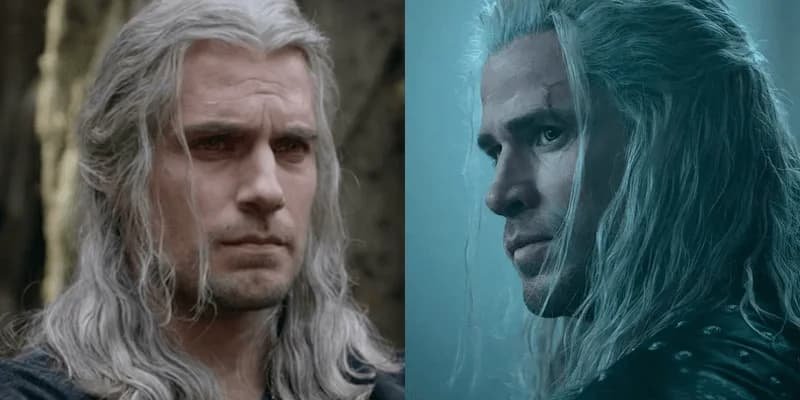
The conversation has been stuck on “Can Hemsworth be as good as Cavill?” That’s the wrong question. The right question is: “Can Hemsworth be the Geralt that Baptism of Fire needs?” Because the two require completely different skillsets.
What Henry Cavill Brought to The Witcher (And Why It Wouldn’t Work Here)
Let’s give credit where it’s due. Henry Cavill’sperformance was built on a foundation of stoic competence, physical prowess, and a commanding silence. He was a force of nature you could believe would take on a monster alone and win. It was perfect for the short stories and the early “lone wolf” setup.
But in Baptism of Fire, that exact energy would work against the story. A Geralt who is too commanding, too sure of himself, would ruin the core dynamic of the team. The story needs a Geralt who can follow, not just lead.
What Liam Hemsworth Needs to Do Instead
So, what does Liam Hemsworth need to bring to the role?
- Vulnerability: We need to see a Geralt who is physically hurting and emotionally uncertain.
- Ensemble chemistry: His performance will live or die on his ability to bounce off his companions, not dominate them.
- Comedic timing: This book is filled with witty banter, and Geralt is often the straight man. Hemsworth needs to land those dry, sarcastic retorts.
- A willingness to be wrong: This is the big one. His Geralt must be comfortable being corrected, lectured, and even mocked by his friends.
Why Replacing Henry Cavill Might Actually Benefit Season 4
Think about it: with Cavill gone, the pressure to recreate the “stoic hero” of Seasons 1-3 is off. The audience expects a change. This gives the writers and Hemsworth a clean slate to embrace the more collaborative, vulnerable Geralt of the books. Furthermore, with a powerhouse like Laurence Fishburne joining as Regis, the dramatic weight isn’t solely on Geralt’s shoulders. This is an ensemble now, and that distributes the pressure.
What Worked in Liam Hemsworth’s Performance
Before the season aired, I outlined specific things to watch for. Here’s how they actually played out:
The Ensemble Dynamic: Success
The company formation scenes work. Milva joins on her own terms. Zoltan’s dwarves get their moments. Most importantly, Regis functions exactly as the books intended – Laurence Fishburne brings gravitas and wisdom that anchors the group. Hemsworth plays well off him, which was always the key test.
Geralt Being Wrong: Partial Success
There are moments where Geralt gets corrected or defers to others’ expertise. But there are also moments where the show can’t resist making him the action hero. It’s a compromise – better than I feared, not as committed as I hoped.
The Lone Wolf Myth: Addressed
The show does lean into the “Geralt needs his team” theme. By the season’s end, the Hanza feels like a genuine found family, not just Geralt’s entourage. This is the core of what Baptism of Fire is about, and Netflix delivered it.
Why Liam Hemsworth Witcher Season 4 Could Surprise Skeptics
I know, it still feels like a long shot. But there are genuine reasons for cautious optimism.
What Game of Thrones and Lord of the Rings Teach About Ensemble Fantasy
The most successful fantasy stories aren’t carried by one person. Game of Thrones was an ensemble where power shifted between characters. Lord of the Rings worked well because the Fellowship shared the load. Baptism of Fire is Sapkowski’s version of this. The story isn’t “Geralt and his sidekicks,” but the story of Geralt’s Company. This structure, if Netflix leans into it, can survive (and even thrive) with a new actor at its center.
The Laurence Fishburne Factor: Why Regis Matters More Than Geralt
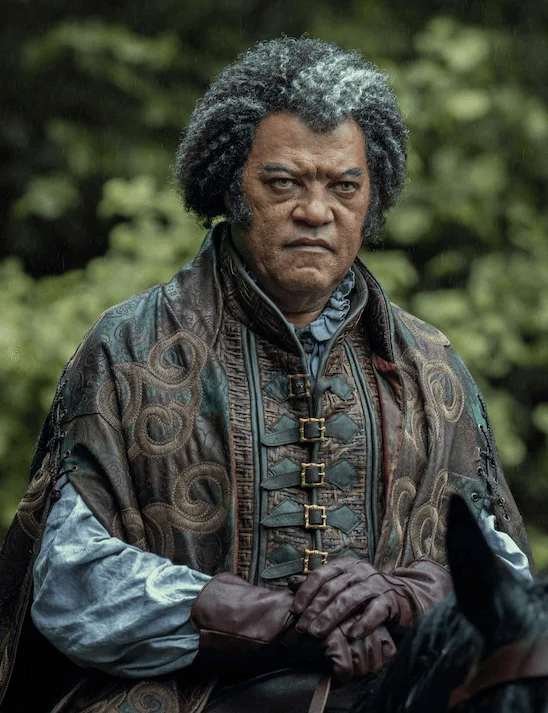
This can’t be overstated. Laurence Fishburne is an Oscar-nominated actor with a towering screen presence. His casting as Regis is the show’s smart move. In the books, Regis quickly becomes the emotional and intellectual heart of the group. Fishburne has the talent to own those scenes, providing a dramatic anchor that allows Hemsworth to, in turn, play a more reactive and less dominant Geralt. Fishburne’s proven ability in ensembles (The Matrix, John Wick) means he can share the load, making Hemsworth’s job significantly easier.
Realistic Expectations for Season 4 Success
Let’s be real: Netflix’s track record with faithful adaptation is spotty at best. Success here doesn’t mean Season 4 will be the best thing on television. It means that if the show embraces the book’s ensemble structure, Liam Hemsworth has a real shot at winning over skeptics by giving us a Geralt we haven’t seen on screen before: one who learns to rely on his friends.
In Short: Quick Answers
Was Liam Hemsworth good as Geralt?
Yes, with caveats. Hemsworth succeeds when playing the ensemble-focused, vulnerable Geralt that Baptism of Fire requires. He has genuine chemistry with Laurence Fishburne’s Regis and handles the banter well. Where he’s less convincing is in the action-hero moments Netflix couldn’t resist adding – those feel like leftovers from the Cavill era rather than organic to this version of the character.
What books does Witcher Season 4 adapt?
Season 4 combines Baptism of Fire (Geralt’s Hanza storyline) and The Tower of the Swallow (Ciri’s Rats/Bonhart storyline). Yennefer’s storyline is largely Netflix original – in the books, Philippa forms the Lodge, not Yennefer. The show compresses two books into one season while inventing connective material.
How accurate is Witcher Season 4 to the books?
Geralt’s storyline: mostly faithful. Ciri’s storyline: adapted from a different book but well-executed. Yennefer’s storyline: almost entirely invented. Overall, it captures the spirit of the source material while taking significant liberties with plot and character dynamics.
Why did Henry Cavill leave The Witcher?
Rumor has it that Henry Cavill left The Witcher due to creative differences with Netflix about adapting the source material, but this was never confirmed by either party. Cavill was known for advocating for closer book accuracy while the show’s direction diverged from Sapkowski’s novels. Liam Hemsworth replaces Cavill starting Season 4.
Should I read the books before watching Season 4?
Not required, but it enhances the experience. Reading Baptism of Fire helps you appreciate what Netflix got right with the Hanza dynamics. Reading Tower of the Swallow provides context for Ciri’s storyline with the Rats and Bonhart. Just don’t expect the Yennefer storyline to match – that’s Netflix’s invention.
Is Witcher Season 4 worth watching?
Yes, especially if you can accept it as an adaptation rather than a translation. The ensemble dynamics work, Ciri’s storyline delivers genuine tension, and Hemsworth proves he can carry the role when the material supports him. It’s the strongest season since the first, even with Netflix’s creative liberties.
Who plays Regis in Witcher Season 4?
Laurence Fishburne plays Regis in Witcher Season 4. Regis is a vampire with medical knowledge and philosophical depth who becomes crucial to the company’s survival. Fishburne’s casting pays off – he anchors dramatic scenes and has great chemistry with the ensemble.
When did Witcher Season 4 release?
Witcher Season 4 released on October 30, 2025. This was Liam Hemsworth’s first season as Geralt, with Laurence Fishburne joining as Regis. Season 5 will be the final season of The Witcher on Netflix.
Final Verdict: The Books Were Right
My original thesis holds up: Liam Hemsworth didn’t need to be Henry Cavill because Baptism of Fire requires a fundamentally different Geralt. The season’s successes come when it embraces the ensemble structure and lets Hemsworth play a more vulnerable, team-dependent witcher. Its weaknesses emerge when Netflix can’t resist the action-hero beats that worked for Cavill but feel out of place here.
What worked:
- The Hanza dynamics and found-family themes
- Laurence Fishburne’s Regis (exactly as good as hoped)
- Ciri’s Rats/Bonhart storyline (effectively adapted from Tower of the Swallow)
- Hemsworth’s chemistry with the ensemble cast
What didn’t:
- Occasional “badass Geralt” moments that undercut his recovery arc
- Yennefer’s entirely invented Lodge storyline (functional but unrecognizable)
- Some timeline compression that rushes emotional beats
If you wrote off the show after Cavill left, Season 4 might change your mind. It’s not perfect, but it’s proof that the recast can work when the source material supports a different interpretation of the character.
If all this talk about the books has you intrigued but you haven’t picked up a book in years, I’ve got a guide on how to escape a reading slump – the Witcher was actually what got me back into reading!
Curious about the full series? Check out my complete Witcher reading order guide for where to start and what to expect.
Very thoughtful article and I totally agree with you in most points. From what I’ve heard and seen about Liam and his depiction of Geralt, I’m very optimistic that he will be a lot more like the Geralt of Baptism of Fire than Cavill’s. The only thing I don’t agree on with you is your “Cavill fought for book accuracy”/”Henry Cavill left The Witcher due to creative differences with Netflix about adapting the source material.” That is just repetition of rumours, which does not make them true. Especially not as Cavill’s Geralt was never really book accurate in the first place and he himself advocated for a couple of changes in comparison to the books. Creative differences might have played a role, but most probably he had other projects that seemed more interesting and lucrative to him, most likely projects where he could shine more as the main protagonist and leader figure than in The Witcher.