Finding books like Stranger things should be easy; the show wears its influence on its sleeve. But most lists lean into horror, and that’s never really been my genre… Fantasy is.
With Stranger Things Season 5 finally here, I wanted to put together the list I wished existed when I first watched the show back in 2016. Every recommendation I found pointed me toward IT, Something Wicked This Way Comes, or some 80s horror deep cut. Great books, I’m sure. But when I think about why Stranger Things actually resonates with me, it’s not the scares. It’s the party dynamics, the impossible odds, the kids way out of their depth facing something ancient and terrible. Those aren’t horror tropes. Those are fantasy tropes.
If you’re here, you probably feel the same way. Maybe you’ve already worked through the horror lists. Maybe you’re a fantasy reader who’s never really clicked with Stephen King. Maybe you just finished Stranger Things Season 5 and need books to read if you like Stranger Things – something with the same emotional core but without the jump scares. Whatever brought you here, I’ve got you covered.
In this article, I’m connecting the tropes that make Stranger Things work to fantasy books I’ve actually read and loved. No generic recommendations, no books I’m name-dropping just because they’re popular. Just genuine picks from someone who’s spent the last few years deep in epic fantasy. Some of these might surprise you, and not every pick matches the vibe perfectly. But each one captures something essential about why Stranger Things works, whether that’s the found family, the portal to darkness, or the kids-versus-ancient-evil energy. None of them are IT.
Why Stranger Things Is Fantasy in a Horror Wrapper
Think about what actually makes Stranger Things work. Yes, there’s the Demogorgon. Yes, there’s body horror and people die. But strip away the 80s aesthetic and the horror set dressing, and what’s left?
Found family is the core of everything. The Party is a fellowship, complete with internal conflicts, loyalty tests, and the slow build up of trust that makes the stakes feel real. Hopper and Eleven’s arc is the same thing on a smaller scale: two broken people becoming family. If you’ve read any epic fantasy, you know this structure well.
Then there’s kids versus ancient evil – a group of young people way out of their depth, facing something that’s been around far longer than them. The Mind Flayer is more than just a monster: it’s an existential threat that adults either can’t see or won’t believe. Swap out Hawkins for a fantasy village and the Upside Down for some kind of shadow realm, and you’ve got the opening for a hundred fantasy novels.
Speaking of which: parallel dimensions are more fantasy than horror. The Upside Down operates like a dark mirror world, a corrupted version of reality that bleeds into our own. That’s not Nightmare on Elm Street. That’s the Shadowfell. That’s Shadesmar. That’s what fantasy has been doing for decades.
Monster hunting drives the plot forward. Every season has the gang researching, strategizing, and gearing up to face something terrible. There’s even a moment in Season 4 where they’re literally buying weapons at a store like they’re preparing for a quest.
What about psychic powers and sinister experiments? Eleven’s arc – a child turned into a weapon by shadowy government forces – resonates beyond horror into science fantasy territory. And crucially, the show takes trauma seriously. Max’s arc in Season 4, Will’s ongoing struggles; these aren’t cheap drama. They’re the kind of character work you find in the best fantasy.
So if you’re looking for books that capture what Stranger Things actually does? Stop searching the horror shelves. Look to fantasy.
Best Books Like Stranger Things for Fantasy Readers
With all that in mind, here are five fantasy books that capture what makes Stranger Things special. I’ve read all of these, and each one hits at least a few of the tropes above. No filler picks, just books I think you’ll love if the show resonates with you.
Fairy Tale – Dark Portals and Teen Trauma (Stephen King’s Fantasy Side)
Yes, Stephen King wrote a standalone fantasy novel. And it’s perfect for Stranger Things fans who bounce off his horror.
Charlie Reade is seventeen, dealing with grief and a recovering alcoholic father, when he discovers a portal to another world hidden in his elderly neighbor’s shed. Sound familiar? Like the Upside Down bleeding into Hawkins, the dark fantasy world of Empis exists just behind a mundane backyard – Charlie descends a spiral staircase into a realm of fairy tale horrors, and suddenly he’s the only one who can stop the world from dying.
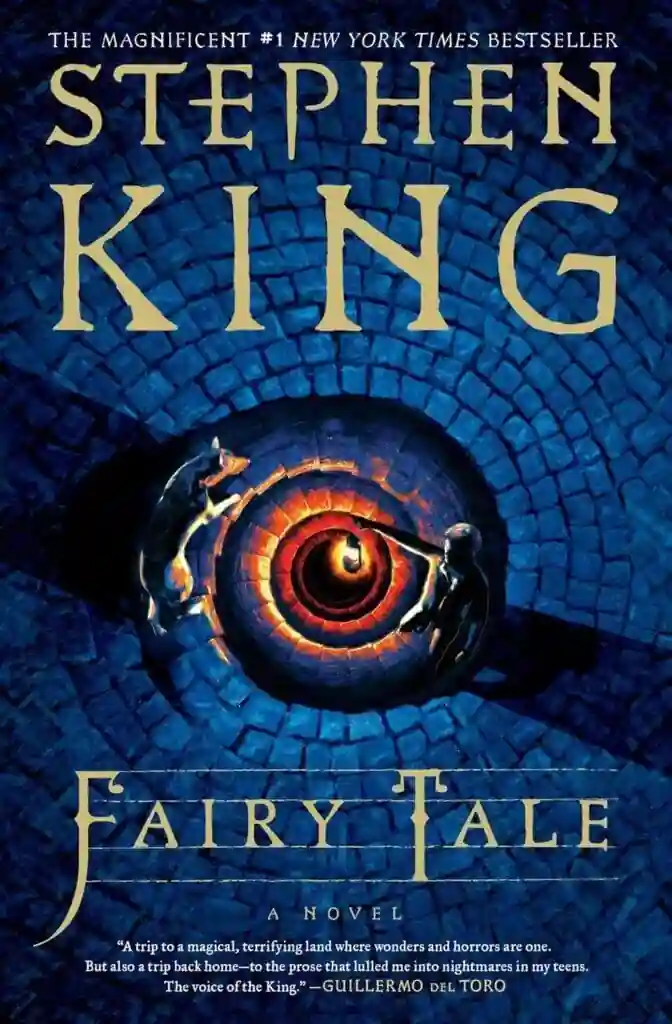
What I love about this book is how King handles Charlie’s trauma. His mom died when he was seven, and that grief shapes everything he does. It’s the same care the Duffer Brothers give to Max’s arc in Season 4; not cheap drama, but actual character work. And unlike most King novels, this one leans into adventure rather than horror. There are dark moments, sure, but think Wizard of Oz and classic Grimm, not IT. No jump scares here.
The Last Wish – Monster Hunting as a Day Job
Every season of Stranger Things follows the same structure: figure out what the monster is, research its weaknesses, gear up, and fight it. That’s literally Geralt of Rivia’s job description.
Geralt doesn’t just hack and slash – he researches, prepares oils and potions, exploits specific weaknesses. The Party flipping through D&D manuals to understand the Demogorgon? Same energy. And like Stranger Things, the best Witcher stories blur the line between monster and victim. Sometimes the creature has a tragic origin. Sometimes the real villain is human.
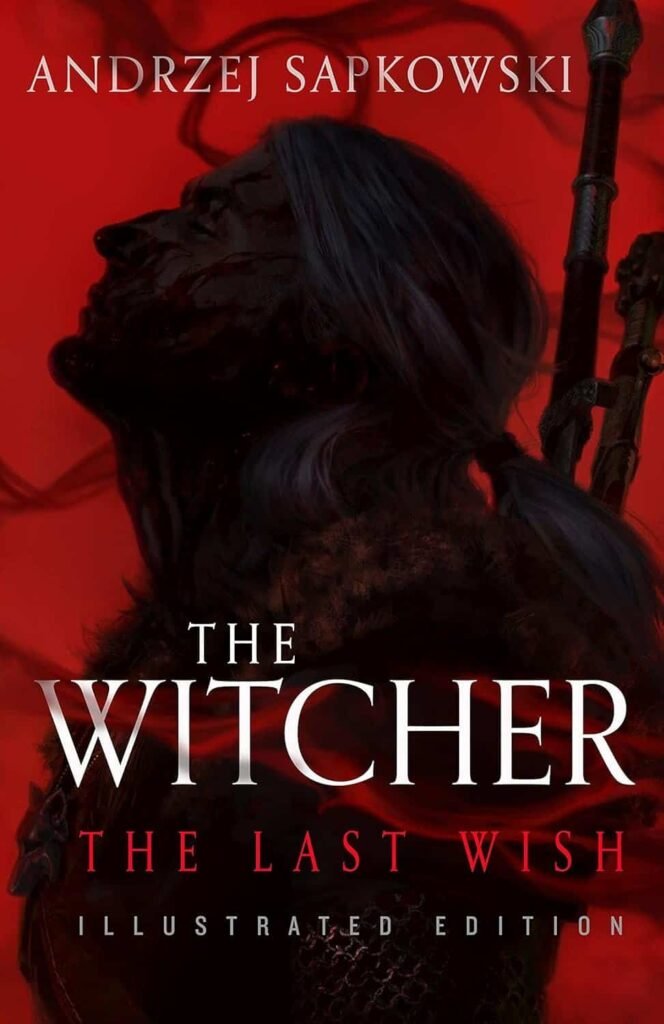
The Last Wish is a collection of short stories, so each tale is its own hunt; perfect if you want that monster-of-the-week energy without committing to a 1000-page epic. Geralt starts as a loner here, but if you keep reading into the main saga, he gradually builds his own found family: Yennefer, Dandelion, and eventually a whole “party” (they call it a Hanza). That group dynamic you’re chasing? It’s there, just a few books in.
Already a fan of the Netflix show or games? The books add layers you didn’t know existed. The Witcher is actually what got me back into reading after years away from books.
Mistborn: The Final Empire – Found Family vs. Impossible Evil
Kelsier’s crew is the Hawkins Party grown up: a band of misfits, each with unique abilities, taking on an immortal evil that’s ruled for a thousand years. The odds are impossible. They try anyway.
The found family dynamic here is the real draw. A thieving crew becomes something more: each member has a specialty, they bicker and bond under pressure, and watching them come together is half the fun. But there’s also that outsider energy running through everything. The skaa are oppressed, treated as subhuman by the nobility, not because of anything they did but because of how they were born. Sound familiar? The Hawkins kids are outcasts and nerds in their world. Same feeling of not belonging, same drive to prove everyone wrong.
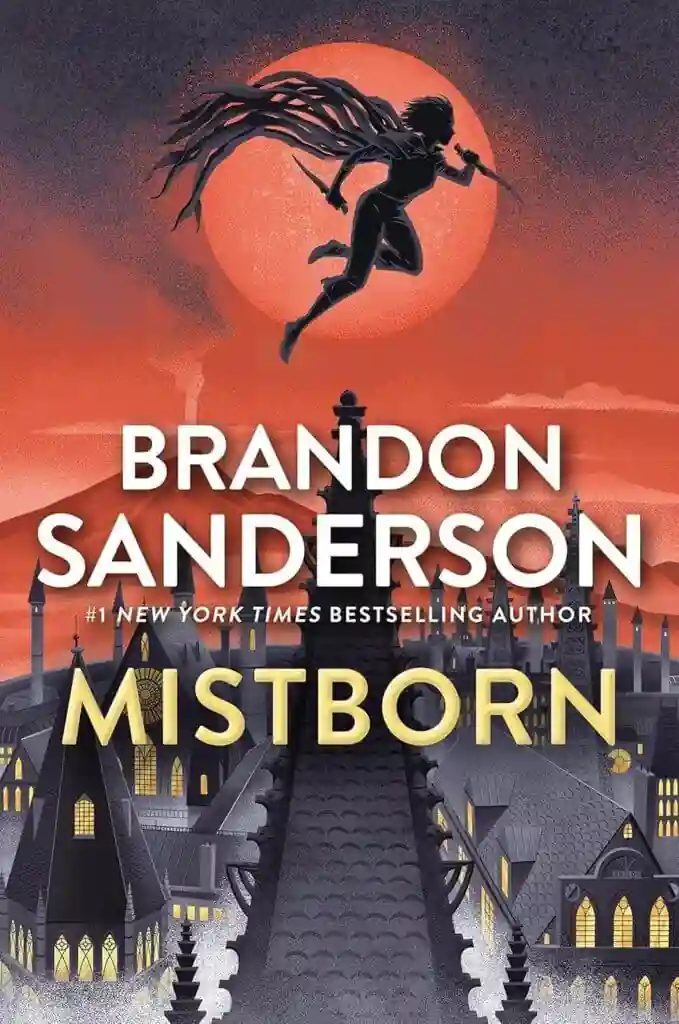
And then there’s Vin, who is basically Eleven. A traumatized girl who’s been used and abused, learning to trust for the first time. She has incredible powers she doesn’t fully understand. She finds a new family who actually cares about her. The parallels are almost eerie. She’s going up against the Lord Ruler – an immortal emperor who’s been in power for a thousand years. Like the Mind Flayer, he’s not just a villain. He’s a force that feels insurmountable.
Want more Sanderson? Mistborn is just the entry point to his interconnected Cosmere universe. Stormlight Archive is his epic masterpiece (though at 1000+ pages per book, it’s a bigger commitment). Warbreaker is a standalone if you want to test the waters further. Check out my complete Cosmere reading order if you want the full roadmap.
Red Rising – Government Experiments, But Make It Space
Eleven was taken as a child and turned into a weapon by shadowy government forces. Darrow, a teenager from the lowest caste of society, is literally reshaped and sent to infiltrate the ruling elite. Different aesthetics, same violation.
Society here is divided by color-coded castes: you’re born Red (worker), Gold (ruler), or something in between, and there’s no changing it. Like being a “nerd” in 80s Hawkins or skaa in Mistborn, you don’t belong because of what you are, not what you’ve done. Darrow’s transformation is brutal and violating. He’s remade against his will to serve someone else’s rebellion. The Eleven parallels write themselves.
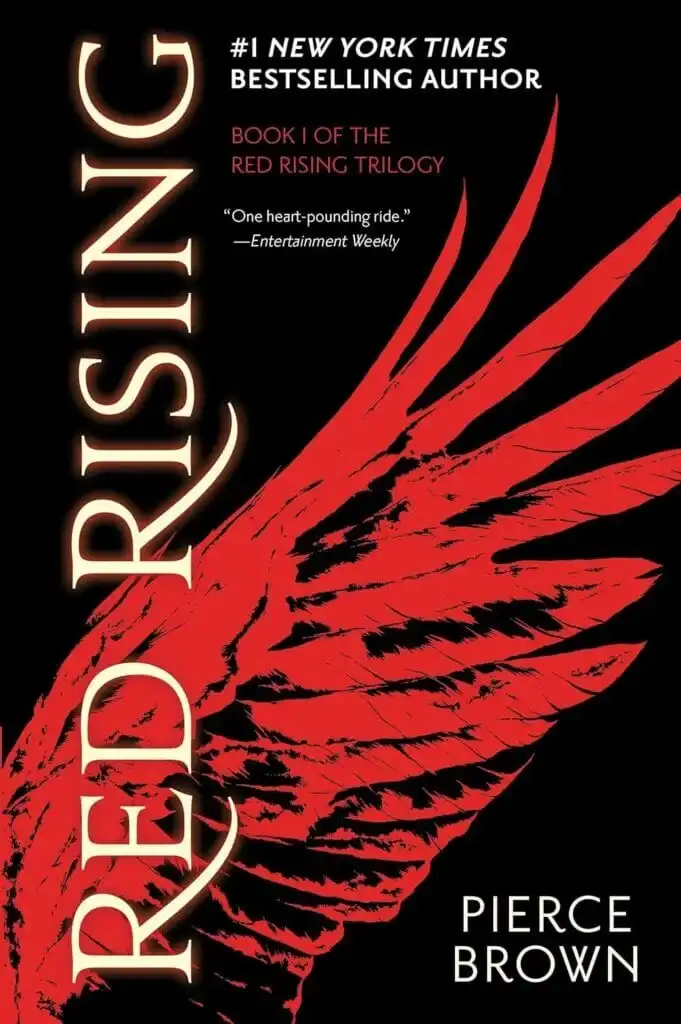
What makes it work is the emotional core. Darrow’s driving force is his late wife’s dream of a freer world; revenge and hope braided together. That’s exactly the kind of personal anchor that makes Stranger Things resonate. And readers love Darrow because he isn’t perfect. He makes terrible choices, learns from them, grows. The “impossible odds but we try anyway” energy is strong here.
Fair warning though: Red Rising goes darker and more violent than Stranger Things. If you’re looking for the warmth of the Hawkins gang, temper your expectations. But if you want the rebellion and righteous anger cranked up to 11? This delivers.
The Eye of the World – Small Town Kids, World-Ending Stakes
If you want the closest thing to “Hawkins Party in a fantasy world,” this is it. A group of young people from a tiny, isolated village get swept up in events that will shape the fate of the world. They didn’t ask for this. They’re not ready. They go anyway.
Emond’s Field is basically Hawkins with sheep: an idyllic, boring village where nothing ever happens, until ancient evil shows up and everything changes forever. Rand, Mat, Perrin, Egwene, Nynaeve – they’re a tight-knit group of young people torn from their homes. They bicker, they support each other, they’re in way over their heads. It’s the Party dynamic, just with horses instead of bicycles.
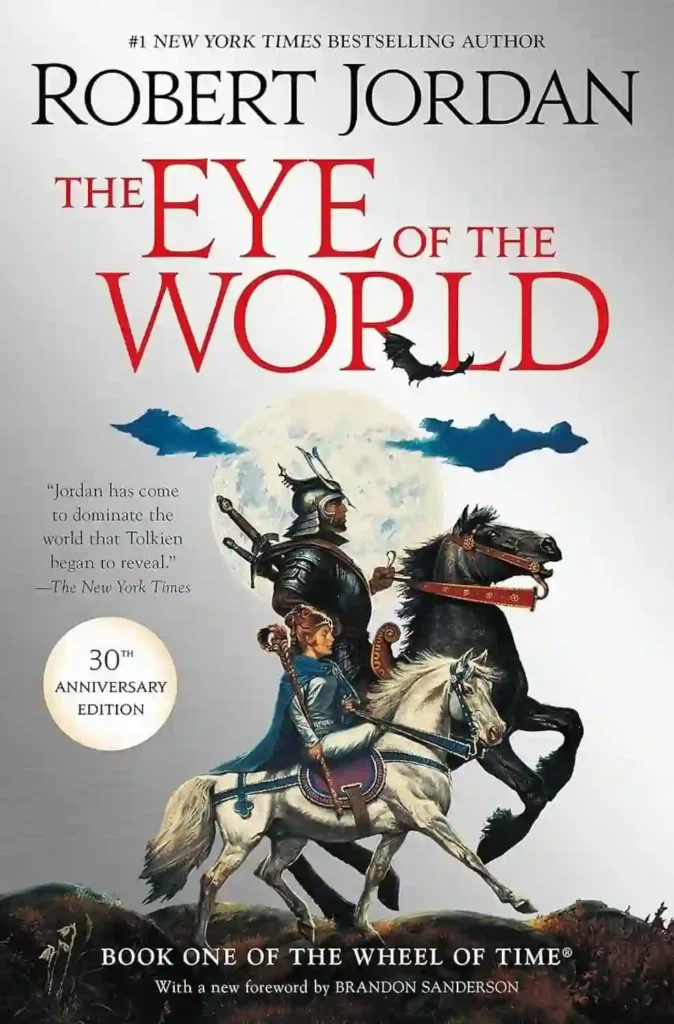
Multiple characters discover powers they don’t understand and can’t fully control. Rand’s arc especially mirrors that “chosen one who didn’t choose this” energy – think Eleven, think Will’s connection to the Upside Down. And Moiraine fills that Hopper role: the adult who knows more than she’s saying, who protects the kids but clearly has her own agenda.
Yes, Wheel of Time is 14 books. But The Eye of the World tells a complete story on its own. Read it, and if it doesn’t click, stop there guilt-free. If it does? You’ve got a lot more waiting for you.
If You Want to Go Deeper (Malazan, Yes Really)
Okay, hear me out.
You know how the Upside Down has all these mysterious rules that the show never fully explains? How fans spend hours theorizing about the Mind Flayer’s origins, the nature of Vecna’s powers, and how it all connects? How half the fun is piecing together the lore yourself?
Malazan is that, but it’s the entire book. From page one.
Steven Erikson’s Gardens of the Moon drops you into a world of warring empires, scheming gods, and ancient powers with zero hand-holding. You’re confused – and that’s intentional. The confusion is the experience. If you’re the type who pauses Stranger Things to theorize, who reads every wiki entry, who loves when a story trusts you to figure things out? Malazan might be your thing.
Fair warning: this is a 10-book commitment, and it’s not for everyone. But if the lore rabbit hole is what you love most about Stranger Things, start here with my chapter-by-chapter reading guide.
In Short: Quick Answers
Is Stranger Things based on a book?
No, Stranger Things is an original Netflix series created by the Duffer Brothers. However, the show is heavily influenced by 1980s pop culture, including the works of Stephen King (particularly IT and Firestarter), the films of Steven Spielberg, and classic D&D monster manuals.
What books inspired Stranger Things?
The Duffer Brothers have cited Stephen King’s novels (especially IT, Firestarter, and The Body), the horror/suspense of Dean Koontz, and the adventure spirit of 80s Spielberg films. The show’s monster naming comes directly from Dungeons & Dragons.
Are there fantasy books like Stranger Things?
Yes! While most recommendation lists focus on horror, Stranger Things shares DNA with fantasy: found family dynamics, portal worlds, kids-versus-ancient-evil, and monster hunting. This guide recommends Mistborn, The Eye of the World, Fairy Tale, The Last Wish, and Red Rising for fantasy readers.
What should I read after finishing Stranger Things?
It depends on what you loved most about the show. For the friend group dynamic, try The Eye of the World. For portal-to-darkness vibes, try Fairy Tale. For found family heists against impossible evil, try Mistborn. For monster hunting, try The Last Wish. These are the best books like Stranger Things for fantasy readers.
Are there official Stranger Things books?
Yes! There’s a whole line of official Stranger Things novels and comics that expand the universe with new stories and character backstories. If you want to stay in Hawkins rather than branch into other fantasy worlds, those are worth checking out. This guide focuses on fantasy books that capture the feel of Stranger Things rather than the official tie-ins.
Where to Start? My Pick for You
Not every reader loves Stranger Things for the same reasons. So here’s my quick guide:
- Want the closest Hawkins Party vibe? Start with The Eye of the World. Small town kids, friend group dynamics, world-ending stakes. It’s the most direct match.
- Love the portal-to-darkness mystery? Fairy Tale captures that suburban-gate-to-hell energy perfectly, and it’s a standalone.
- Here for the found family? Mistborn: The Final Empire delivers a crew you’ll love, plus the Vin/Eleven parallel is almost eerie.
- Just want monsters? The Last Wish is monster-hunting distilled, with short stories you can pick up anytime.
- Want something darker and angrier? Red Rising cranks the rebellion energy to 11.
And if none of these feel right? That’s fine. The point isn’t to find a Stranger Things clone, it’s to find what you love about the show and chase that thread into books. Whether you’re after books similar to Stranger Things in vibe, theme, or just that feeling of kids-versus-impossible-evil, fantasy’s got you covered.
Feel free to leave your own book recommendations in the comments!