A pitch-black horse ambled very slowly onto the village green, from behind the barns. It bore a rider. White-haired, in a black leather jerkin with silver studs on the shoulders. Two swords were sticking up above the rider’s right shoulder.
— Chapter 1
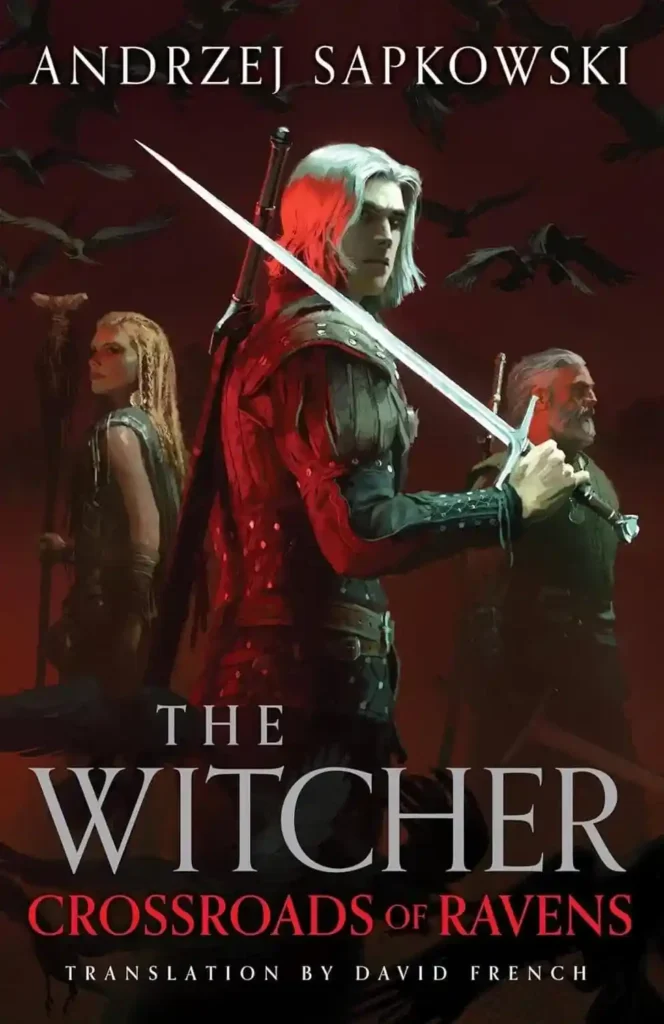
Crossroads of Ravens is the first new Witcher novel since Season of Storms over a decade ago; it’s not what I expected.
This isn’t a continuation of Geralt, Ciri, and Yennefer’s story. Instead, Sapkowski takes us back to the very beginning: a young Geralt, fresh out of Kaer Morhen, learning what it actually means to walk the Path. If you’ve been wondering whether Crossroads of Ravens is worth your time, where it fits in the series, or if you even need to read the other books first – I’ve got you covered.
I finished the book about a month ago, and I have thoughts. Here’s everything you need to know before deciding whether to pick it up.
What Is Crossroads of Ravens?
The First New Witcher Book in Over a Decade
Crossroads of Ravens is a prequel novel set decades before the events of The Last Wish. Published in Poland in November 2024 and released in English in September 2025, it’s Sapkowski returning to Geralt’s world after years of silence.
But this isn’t the Geralt you know. No Yennefer, no Ciri, no decades of monster-hunting experience. This is an eighteen-year-old witcher who just completed his training at Kaer Morhen, heading out into the world for the first time. He’s skilled, sure, but he’s also naive, impulsive, and still figuring out what kind of witcher he wants to be.
The English translation comes from David French, who’s handled every Witcher book since Blood of Elves. If you’ve read the series in English, you already know his work; the prose feels consistent with the rest of the saga.
What surprised me most is the tone. This isn’t the episodic monster-hunting of the short story collections, and it’s not the sprawling political epic of the main saga. Crossroads of Ravens is a focused, character-driven story about mentorship, identity, and the choices that shape who we become. Think origin story, but with more weight than that term usually implies.
Where Does It Fit in the Witcher Series?
Chronologically, Crossroads of Ravens is the earliest point in Geralt’s story we’ve ever seen. It’s set in 1229, years before even the first short story in The Last Wish. If you’re trying to figure out when to read it, here’s how it all fits together:
The Witcher Timeline (Chronological)
| Book | When It’s Set |
|---|---|
| Crossroads of Ravens | 1229 – Young Geralt |
| The Last Wish | 1240s – Short stories |
| Season of Storms | Between the short stories* |
| Sword of Destiny | 1260s – Meets Ciri |
| Blood of Elves → Lady of the Lake | 1263-1268 – Main saga |
*Season of Storms has an epilogue set far in the future; read it after Lady of the Lake.
Now, chronological order and reading order aren’t the same thing. Just because Crossroads of Ravens happens first in the timeline doesn’t mean you should read it first. Season of Storms has a similar issue; it’s set between the short story collections but contains epilogue spoilers for Lady of the Lake.
I’ll get into whether you need the other books in the next section, but here’s the short version: Crossroads of Ravens works as a standalone and as part of the larger series. Sapkowski wrote it knowing some readers would be newcomers. The question is really about what experience you want.
For the full breakdown of how all nine books connect, check out my complete Witcher reading order guide.
Should You Read Crossroads of Ravens First?
Short answer: you can. Crossroads of Ravens works as a standalone novel, and honestly, it might be one of the better entry points into the Witcher if you’re curious but intimidated by nine books.
It works for newcomers because Geralt himself is new to everything. He’s learning what it means to be a witcher, discovering how the world treats his kind, making mistakes. You’re not dropped into the middle of established relationships and political intrigue; you’re starting fresh alongside him.
That said, existing fans will catch things newcomers won’t. References to Kaer Morhen hit differently when you know what happens there later. Vesemir’s absence has weight if you’ve met him in the other books or games. And there’s a mystery at the heart of this novel that connects to witcher history in ways that reward longtime readers.
So my recommendation depends on where you’re coming from:
- New to the Witcher? Start here if the “young origin story” angle appeals to you, or start with The Last Wish if you want the classic entry point. Either works.
- Already read the series? This slots in nicely as a “bonus” story, similar to Season of Storms. You’ll appreciate the callbacks.
No wrong answers here. Sapkowski didn’t write a book that punishes newcomers.
What Is Crossroads of Ravens About? (Spoiler-Free)
The Premise
Geralt has just completed his training at Kaer Morhen and sets out on his own for the first time. Things go badly almost immediately; he ends up facing execution before a grizzled older witcher named Preston Holt intervenes. What follows is an uneasy partnership as Holt takes Geralt under his wing, teaching him lessons that Kaer Morhen couldn’t.
Holt isn’t a gentle mentor. He throws Geralt into danger to teach survival, drills him on anatomy (“the bregma, sphenoid bone, mastoid process, Adam’s apple”), and has his own agenda that slowly reveals itself. There’s a mystery at the heart of this story involving witcher history, a massacre, and choices made decades ago that still echo forward.
The Setting
Most of Crossroads of Ravens takes place in Kaedwen – specifically the borderlands known as the Marches. If you’ve played The Witcher games, you’ll recognize some names (Kaedwen, Ard Carraigh, Ban Ard), but this is frontier territory: rough, sparsely populated, and far from the centers of power.
The Marches are governed by margraves: local lords who push the kingdom’s borders outward, driving out elves and claiming new land. It’s a region where the king’s laws feel distant, where witchers are barely tolerated, and where construction projects like the Great Highway draw monsters and opportunity in equal measure.
Sapkowski leans into the political texture here more than in the short stories. You get a sense of how Kaedwen actually works – the petty officials, the corrupt burgomeisters, the crown agents watching everyone. Monster hunting happens against a backdrop of suspicion and hostility; this society barely tolerates witchers.
There’s also Rocamora, Holt’s remote estate where much of the middle act takes place. Training sequences, long conversations, the slow rhythm of winter. It’s a deliberate contrast to the road, and if you enjoy fantasy that takes time to breathe between action beats, those chapters reward patience.
Themes Worth Noting
Choice and identity run through everything. The title itself comes from a literal crossroads scene where Holt offers Geralt four different roads; Geralt chooses to follow him instead. That question of who do you want to be keeps resurfacing, culminating in moments where Geralt has to decide what kind of witcher he’ll become.
“Firstly primo, I’m not a hired killer, nor someone’s lackey. Secondly primo, two hundred crowns for a murder isn’t cash – it’s a pile of shit.”
— Chapter 14
The mentor-apprentice dynamic carries the emotional weight. Holt’s lessons aren’t just combat techniques; they’re about survival, ethics, and the gap between what witchers are trained to do and what the world actually demands of them. “Never draw a sword on humans – use other methods.”
And underneath it all: revenge versus purpose. Holt has his reasons for everything he does. Whether Geralt inherits those reasons or forges his own path is the central tension.
What Makes It Different
If you’re expecting the episodic structure of the short stories or the ensemble cast of the saga, recalibrate. Crossroads of Ravens is focused and intimate; mostly single POV, one central relationship, a contained story with clear thematic through-lines.
Sapkowski himself put it this way in an interview:“I return to the roots of Geralt’s journey – not the fearless monster slayer we know, but a young Witcher just beginning to understand the burden of his destiny.”
It’s also the most we’ve ever learned about witcher history outside of Kaer Morhen itself. If you’ve wondered what the Path actually looks like for a new witcher, this is it.
There’s also subtle foreshadowing for long-time fans, including hints that Geralt may have some trouble with sorceresses in his future.
“Then let’s ride. And leave the crossroads to the ravens.”
— Chapter 2
Is Crossroads of Ravens Worth Reading?
Yes. I finished it in about two weeks, and it stuck with me.
The Holt-Geralt relationship carries the book. Watching this grizzled, morally complicated mentor shape a young witcher who’s still figuring out his own code – that dynamic works. When the story reaches its emotional peak (you’ll know it when you get there), it hits hard. I saw it coming and it still landed.
What surprised me most is how much I enjoyed the quieter stretches. There are contemplative chapters at Rocamora – training, conversation, philosophy about what witchers are and why they exist. If you like Sapkowski’s prose when he’s taking his time, those sections reward patience. And when the violence comes, it’s brutal in a way that feels true to this world. The contrast works.
The Nenneke scene captures the book’s tonal balance perfectly:
“Revenge only brings joy to vapid and primitive minds.”
— Chapter 20
“I know.”
“Revenge will place you outside the law.”
“I know.”
“—kill those fuckers.”
That moment lands because of everything that comes before it. Context is everything.
And without spoiling anything: if you’ve ever wondered about the whole “witchers don’t feel emotions” thing? This book has thoughts on that. Turns out propaganda is a hell of a drug.
By the end, Geralt picks his own Path. It feels earned.
Who Should Read It
- Witcher fans hungry for more Geralt. This delivers. You’ll also finally learn where the name “Roach” comes from.
- Game/show fans curious about the source material. The origin story angle makes it approachable.
- Fantasy readers who love mentor-apprentice dynamics and moral complexity.
Who Might Want to Skip It
- If Sapkowski’s style bounced you before, this won’t change your mind.
- If you’re only here for Ciri and Yennefer, they’re not in this one.
- If you need constant action, the contemplative pacing might test you.
- If you need tidy conclusions, the ending may feel abrupt. Sapkowski wraps things up quickly.
In Short: Quick Answers
Should I read Crossroads of Ravens first?
You can – it works as a standalone and doesn’t spoil the main saga. If you’re new to the Witcher and the “young origin story” angle appeals to you, it’s a valid entry point. That said, most fans recommend starting with The Last Wish for the classic experience. Either works; Sapkowski wrote this knowing newcomers would pick it up.
When should I read Crossroads of Ravens?
If you want full context, read it after finishing Lady of the Lake (the main saga’s conclusion). But unlike Season of Storms, Crossroads of Ravens doesn’t contain major spoilers – so reading it standalone or even first is perfectly fine. It’s set decades before the other books, so timeline-wise you’re not missing anything.
How long is Crossroads of Ravens?
400 pages in hardcover, or 7 hours 9 minutes on audiobook. It’s a focused, standalone story – shorter than the saga novels but longer than the short story collections.
Is there a Crossroads of Ravens audiobook?
Yes! Narrated by Peter Kenny (who voiced the entire Witcher series), released September 30, 2025. If you’ve listened to the other Witcher audiobooks, you know what quality to expect.
Will there be more Witcher books after Crossroads of Ravens?
Sapkowski has confirmed yes – he mentioned a timeline of “three or four years” for the next one. Crossroads of Ravens isn’t the end.
Is Crossroads of Ravens connected to the Netflix show?
No – this is book canon only. The show hasn’t adapted this material (yet). If you’re coming from the Netflix series, this is set way before any of those events. Check out my Witcher Season 4 breakdown for how the show connects to the source material.
Does Vesemir appear in Crossroads of Ravens?
No – Vesemir stays at Kaer Morhen. But he’s mentioned throughout, and the book adds context to his relationship with other witchers. If you know Vesemir from the games or show, his absence here actually says something about how witchers operate after training ends.
How does Crossroads of Ravens compare to Season of Storms?
Both are standalones set outside the main saga, but they’re very different reads. Season of Storms is a side adventure with Geralt already established; Crossroads of Ravens is an origin story with real character development stakes. I found Crossroads more satisfying because it feels like it matters – it’s not filler between the short stories, it’s foundation.
How steamy is Crossroads of Ravens?
Not very. There are implied encounters, but Sapkowski doesn’t linger on them – the prose moves on. If you’ve read The Last Wish, it’s the same approach. This isn’t Game of Thrones.
Start Your Witcher Journey
Whether Crossroads of Ravens is your first Witcher book or your ninth, there’s more to explore. If this origin story hooked you, the rest of the series only gets richer – Ciri, Yennefer, and the full saga await.
Not sure where to go next? My complete Witcher reading order guide breaks down all nine books, explains what Netflix changed, and helps you find your path through the series.
“Dubhenn haern am glândeal, morc’h am fhean aiesin”
— Chapter 21
“My glow will cut through the darkness, my brightness will disperse the gloom.”