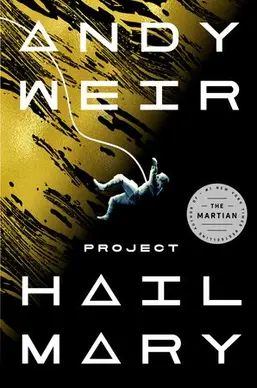
Project Hail Mary is Andy Weir’s best book. Yes, better than The Martian. I will die on that hill.
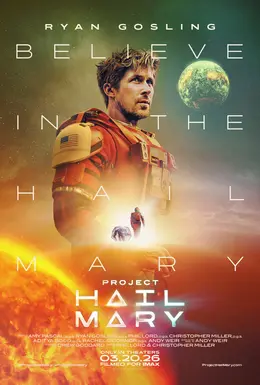
With the movie dropping in March 2026, you’re probably here for one of three reasons: you want a refresher before watching, you want to know what happens without reading 500 pages, or you just finished and need someone to process that ending with. This Project Hail Mary summary covers all 30 chapters, every major plot point, and the ending explained — spoiler-free up top, full spoilers in the chapter breakdowns.
What Is Project Hail Mary About?
A man wakes up on a spaceship with no memory. He doesn’t know his name, where he is, or why two dead bodies are lying in beds next to him. All he knows is that gravity feels wrong and the locked door wants a name he can’t remember.
That’s the opening. From there, the story splits into two timelines: the present, where our protagonist pieces together his mission alone in deep space, and flashbacks that reveal how humanity discovered an extinction-level threat to the sun — and built a desperate last-chance ship to stop it.
Yes, the science is excellent. But the reason this book sticks with people is the relationship at its center. Around Chapter 6, the story transforms from a solo survival thriller into something completely different. I won’t spoil what that is if you haven’t read it yet, but it’s the reason this book makes grown adults ugly-cry on public transit.
If you liked The Martian’s problem-solving energy but wished it had more emotional depth, this is that book.
Before You Start: What to Know
A few things that help going in:
- 30 chapters. The book alternates between present-day scenes on the spaceship and flashbacks to Earth. Some chapters are purely one or the other; most are both. The chapter summaries below are labeled Present, Flashback, or Both so you always know where you are.
- It’s hard sci-fi, but accessible. Weir explains every concept as Grace figures it out. You don’t need a physics degree. If you got through The Martian, you’ll be fine here.
- The amnesia is the structure. Grace’s memory returns gradually, which means the reader learns things at the same pace he does. The flashbacks aren’t random; each one unlocks right when the present-day story needs it.
- It starts slow, then doesn’t stop. The first few chapters are a man alone in a room figuring out basic facts. Trust the setup. Everything pays off.
Character Guide
These are spoiler-free introductions based on how characters appear early in the book.
Ryland Grace
A junior high science teacher from San Francisco who wakes up on a spaceship with no memory of how he got there. Before the mission, Grace was a microbiologist who left academia after publishing a controversial paper arguing that life doesn’t require water. He’s smart, self-deprecating, and way out of his depth. Think Mark Watney, but less cocky and more “accidental hero who’d really rather be grading homework.”
Rocky
An alien from the 40 Eridani star system who Grace encounters at Tau Ceti. Rocky is spider-like and roughly the size of a Labrador, with a rocky carapace, five legs, and no eyes; he navigates entirely through sonar. He speaks in musical chords and breathes ammonia at 29 atmospheres. He’s also an engineer, not a scientist, which matters more than you’d think. Rocky is the reason most readers cry at least twice.
Eva Stratt
Dutch. Former ESA administrator. Now runs the Petrova Taskforce with unlimited authority granted by a secret unanimous UN vote. Stratt doesn’t ask; she conscripts. She doesn’t negotiate; she dictates. Every nation on Earth answers to her, and she wields that power without hesitation. Whether she’s a villain or the only person willing to make impossible choices depends on how you feel by Chapter 23.
Supporting Cast
- Dimitri Komorov — Russian Astrophage researcher. Brilliant, warm, delivers terrifying scientific facts with a cheerful shrug. Fan favorite for good reason.
- Commander Yáo — Chinese astronaut. Mission commander. Stoic, competent, says very little; when he does speak, it lands.
- Olesya Ilyukhina — Russian engineer. The crew’s personality. Bear-hugs strangers, drinks vodka, and volunteers for a suicide mission with zero hesitation.
- DuBois — American scientist. Three doctorates. Speaks so softly you can barely hear him. Clinically precise about everything, including his personal life.
- Steve Hatch — Canadian engineer. Irrepressibly optimistic Beatles superfan who builds the mission’s unmanned data probes (named John, Paul, George, and Ringo, naturally).
Project Hail Mary: Chapter Summary
Chapter 1 — Both
A man wakes from a coma in an unfamiliar room; a computer keeps asking “What’s two plus two?” Two other patients lie in beds nearby, long dead. He can’t remember who he is. A flashback: at a San Francisco diner, he reads an email from Dr. Irina Petrova about a mysterious infrared arc stretching from the sun to Venus. Back in the present, he explores and finds a fully stocked laboratory; he recognizes every piece of equipment by name. He’s a scientist. A locked hatch demands his name to open; he doesn’t have one. Then he notices something strange: objects fall too fast. He times it. Gravity here is 15 m/s² instead of Earth’s 9.8. Wherever he is, it’s not Earth.
Chapter 2 — Both
He builds a pendulum to test whether he’s in a centrifuge; the math rules it out. No planet, moon, or asteroid in the solar system has this gravity. In flashback: his friend Marissa, a DOE scientist, reveals over drinks that the sun is dimming. Projections show an ice age within decades; crop failures, mass starvation. A later flashback shows the ArcLight probe arriving at Venus on live TV; its microscope reveals tiny black dots that are moving. He’s watching from his apartment, excited to tell his students tomorrow. Back in the present, an “angular anomaly” alert fires; the computer shows a velocity of ~11,872 km/s, auto-correcting. He accepts the truth: he’s on a spaceship. His dead roommates were his crew. He breaks down crying.
Chapter 3 — Both
Flashback: he’s a junior high science teacher. Eva Stratt arrives at his classroom; Dutch, former ESA administrator, now heading the Petrova Taskforce with unlimited authority from a secret UN vote. She wants him to examine the ArcLight samples because he once wrote a paper arguing life doesn’t require water; that makes him uniquely qualified for organisms living on the sun. He refuses. FBI agents bring him to a quarantine lab anyway. The sample arrives: dozens of microscopic cells, opaque and wriggling. Nothing can penetrate them; they absorb every form of radiation. But they emit infrared light when moving; it’s how they propel themselves. Grace coins the name “Astrophage”: star-eater. In the present, he finally remembers his name — Dr. Ryland Grace — and unlocks the control room. The mission crest reads “HAIL MARY.” He’s decelerating toward a star in another solar system.
Chapter 4 — Both
Flashback: Grace discovers Astrophage maintains a constant body temperature of exactly 96.415°C regardless of environment, and absorbs every form of radiation thrown at it. He kills one with a nanosyringe; dead Astrophage can finally be analyzed. The result guts him: it’s water-based. His lifelong thesis was wrong. In the present, he maps the ship: control room, lab, dormitory, fuel bays packed with Astrophage, and four unmanned probes named John, Paul, George, and Ringo; data couriers designed to carry findings back to Earth. He realizes this is a one-way suicide mission. In flashback, the word “Astrophage” reaches national TV within a day; Grace sees his students’ futures threatened and races back to the lab demanding to keep working. In the present, he finds crew uniforms for Commander Yáo and Olesya Ilyukhina, dresses both bodies, and jettisons them from the airlock: “I commend your body to the stars.”
Chapter 5 — Flashback
Grace names his three Astrophage (Larry, Curly, Moe) and digs into their biology. Labs worldwide share findings without peer review: Astrophage has DNA, mitochondria, ATP; familiar Earth-like biology despite living on the sun. Grace discovers they navigate by CO₂ spectral light; when he tests it, all three launch toward the filter at near light speed and vanish between camera frames. Sealed in darkness with makeshift IR goggles, he finds them stuck to the filters; a fourth cell has appeared. He’s accidentally bred one. “Hello, Shemp.” The full life cycle clicks: Astrophage gathers energy on the sun, rides magnetic field lines to Venus, collects CO₂ to reproduce, then parent and child return. Stratt ships him to a Chinese aircraft carrier where Dimitri Komorov reveals Astrophage stores energy via mass conversion: E=mc². The crisis becomes clear: every nearby star is infected; our sun will dim enough to cause an ice age. But Tau Ceti, right in the middle of the cluster, is completely unaffected. Stratt’s plan: build a ship, send it there, find out why.
Chapter 6 — Both
Grace accepts his fate: find answers, send them home via beetles, then die. His memories are returning; he knows why he’s here. The ship’s instruments reveal staggering numbers: engine output of 540 trillion watts, a trip lasting over 1,000 days, and at least 13 years passed on Earth due to relativity. He mourns his crewmates and throws himself into learning the ship. In flashback, Stratt reveals the crew confinement problem; Soviet Mars experiments ended in stabbings by day 94. The solution: medically induced comas for the entire journey, possible only for the 1-in-7,000 humans with “coma resistance” genes. In the present, the engines finally cut off. Grace fires up the Petrovascope and finds Tau Ceti’s Petrova line; Astrophage is here. Then a flashing light appears a few hundred meters away. He switches to visible light: a triangle-shaped ship with flat surfaces. “Holy fucking shit!”
Chapter 7 — Present
Grace rules out a second Earth ship; the alien vessel — which he dubs the “Blip-A” after its radar signature — is 139 meters long, three times the Hail Mary, and built entirely of flat panels no human engineer would use. The Blip-A matched his velocity exactly; intentional positioning. Grace fires his spin drive briefly as a test; the alien repeats the pattern within seconds. There’s an intelligent being aboard. A hull robot sends a cylinder drifting toward him at exactly the same velocity Grace used earlier. He suits up, catches it after a 40-minute EVA, and brings it inside. The cylinder is scalding hot and smells powerfully of ammonia. The aliens might live in an environment hotter than boiling water.
Chapter 8 — Both
Flashback: Dr. Lokken, a Norwegian engineer, forces her way into the project by going through six world leaders simultaneously. She identifies a critical flaw: lab equipment won’t work in zero-g. Her solution is a centrifuge that splits the ship in two after fuel is spent, using cables to create artificial gravity. Stratt drafts her on the spot. In the present, Grace activates the centrifuge and gets 1g for the first time. The alien ship mimics the spin; humanity’s first miscommunication with another species. He examines the cylinder: it’s made of xenonite, an impossible solid-xenon compound. Inside, a star map showing 31 local stars, with a filament connecting Tau Ceti to 40 Eridani; the aliens’ home system, also infected with Astrophage. Grace solders a wire from Sol to Tau Ceti on the map and sends it back. He names them “Eridians.”
Chapter 9 — Both
Grace decides any information is worth the risk of contact. He chisels off a hull sample for the Eridians to analyze for their proposed tunnel; the hull robot waves at him. In flashback, Dimitri demonstrates the spin drive: 20 micrograms of Astrophage produces 60,000 Newtons of thrust. The energy is terrifying; detonating all 2 grams at once would vaporize the aircraft carrier. In the present, the Eridian ship approaches with a xenonite tunnel. Robot arms pull the Hail Mary to the tunnel opening; it pressurizes with Grace’s air. A dividing wall of hexagonal panels separates the two environments. Three knocks from the other side.
Chapter 10 — Present
Grace knocks back. Through a clear panel, a three-fingered hand appears; the alien holds up a tiny model of Grace’s EVA suit and pushes it toward a model of his ship. “Go back to your ship.” While Grace is inside, the robot replaces the divider with a single clear xenonite window. Rocky revealed: spider-like, Labrador-sized, with a pentagon-shaped carapace, five legs each ending in a three-fingered hand, rocky granite-like skin, and no visible eyes or face. “He’s a spider. A big-assed spider.” Grace nearly flees, then recovers. Rocky speaks in musical chords; no mouth visible. He leaves two spheres encoding their atmospheres: the Hail Mary breathes oxygen; the Eridians breathe ammonia at 29 atmospheres. They establish their first shared unit of measurement through Rocky’s base-6 clock.
Chapter 11 — Both
Rocky has built a mini-airlock in the divider wall for exchanging objects. Grace sends a tape measure through; the rubber melts instantly in Rocky’s 210°C environment, but Rocky is delighted by the spring mechanism, pulling the tape out and snapping it back like a toy. Key discovery: when Grace tries to show the centimeter markings, Rocky can’t find them. Rocky has no eyes. He “sees” with passive sonar; sound waves resolving his 3-D environment. In flashback, the entire software industry sues because the Hail Mary‘s computer contains every copyrighted work ever digitized; Stratt produces an international immunity treaty and five armed soldiers. Grace sets up a Fourier transform to decode Rocky’s musical chords into individual notes and starts building a translation dictionary.
Chapter 12 — Present
Language learning begins: numbers first, then yes and no (jazz hands vs fists tapped together), then thousands of words over several hours. Grace writes a real-time translation script; Rocky memorizes every word after hearing it once. Grace brings a vial of Astrophage; Rocky’s whole posture changes. Both confirm they’re here for the same reason: “Astrophage on me star. Bad bad bad.” Then the bombshell: Rocky is alone on his ship. Original crew of 23, all dead; his voice drops a full octave. Grace is alone too. They press hands against the divider wall. “Well, you’re not alone anymore, buddy. Neither of us are.”
Chapter 13 — Both
Flashback: Stratt and Grace visit a New Zealand maximum-security prison to recruit Dr. Robert Redell, an engineer serving life for negligence that killed seven workers at his solar thermal plant. Redell proposes “blackpanels”: dead-simple Astrophage breeders scaled to cover a quarter of the Sahara, breeding 1,000 kg of Astrophage per day. In the present, Grace and Rocky finally confirm they’re here for the same reason: both stars are infected, both species face extinction. Rocky’s crew died from an illness no one understood — “Many many cells die. Not infection. Not injury. No reason.” Grace starts explaining radiation; Rocky has never heard of it: “No. No mass in space. Space is empty.” Second flashback: Lokken shares CERN’s discovery that Astrophage stores energy as neutrinos — explaining both the Petrova wavelength and the 96.415°C critical temperature — and proposes lining the Hail Mary‘s hull with Astrophage slurry as radiation shielding.
Chapter 14 — Both
Flashback: Dr. Leclerc, a French climatologist, delivers the worst prediction: 3.5 billion people dead within 19 years from cascading crop failures. Stratt needs 27 years; her solution: deliberately accelerate global warming. 241 nuclear bombs detonate along an Antarctic fissure to release trapped methane; Leclerc, a lifelong environmentalist, gives the order and cries. In the present, Grace finally explains radiation to Rocky — three hours, fifty new words. Rocky goes quiet: “Thank. Now I know how my friends died.” His homeworld Erid is a super-Earth with a magnetic field 25 times stronger than Earth’s; no radiation or light reaches the surface, which is why Eridians never evolved eyes. Rocky survived because Astrophage fuel near his workshop shielded him; his crewmates had no such protection. They dive deep into Eridian biology: steam-powered muscles, liquid mercury blood, two circulatory systems at 210°C and 305°C. Rocky’s insight on matching tech levels: “If planet has less science, it no can make spaceship. If planet has more science it can understand and destroy Astrophage without leaving their system.” He builds a xenonite life-support ball and visits the Hail Mary for the first time.
Chapter 15 — Both
Rocky proposes moving in permanently: “You ship has more science. You and me science how to kill Astrophage together. Save Earth. Save Erid.” He moves aboard via his spaceball, rolling on a magnetic strip through the ship. He’s ecstatic about the lab: “Good good good room!” Their skills dovetail perfectly; Rocky’s Astrophage collection device broke during the trip, and he spent years failing to fix it alone. “I am repair Eridian. I not science Eridian. Smart smart smart science Eridians died.” The Hail Mary‘s collector is intact. Rocky has been at Tau Ceti for 46 Earth years, alone. He’s 291 years old; Eridians live roughly 689 years on average. In flashback, Dr. Lamai demonstrates the coma technology: automated care stations, procedural algorithms, and a blood test for coma-resistance genes. Tens of thousands volunteer for the suicide mission.
Chapter 16 — Both
Rocky offers Grace 2 million kilograms of Astrophage fuel; Grace can go home. He breaks down sobbing. The one-way suicide mission just became survivable. In flashback: crew selection. Commander Yáo (Chinese, most qualified, stoic), Engineer Ilyukhina (Russian; bear-hugs Stratt on arrival: “I’m here to die for Earth! Pretty awesome, yes?!”), Science Specialist DuBois (American, three doctorates, whisper-quiet). Backup science expert Annie Shapiro, on track for a Nobel. DuBois casually reveals Grace has coma-resistance genetic markers; Stratt never told him. In the present, they’re en route to Tau Ceti e. Rocky names the planet Adrian, after his mate; Eridians are hermaphrodites who mate for life. Rocky doesn’t know if Adrian has moved on: “I gone a long time.”
Chapter 17 — Both
They arrive at Adrian; a pale-green rocky world with an atmosphere of 91% CO₂ and an unusual amount of methane. Grace collects samples via EVA; under the microscope, he finds not just Astrophage but a whole ecosystem: translucent cells, bacteria, amoeba-like organisms. Rocky’s eureka moment: “Some life on Adrian EATS Astrophage!” Adrian is the Astrophage homeworld, and its population is kept in check by a natural predator. First fist-bump through the xenonite wall. In flashback, DuBois and Shapiro have begun a sexual relationship, announced with clinical precision: “There should be no secrets within the core mission group.”
Chapter 18 — Both
Flashback: launch day at Baikonur. Ilyukhina raises her vodka: “Do not fuck up my house, Roscosmos bastards!” In the present, initial predator experiments fail; the organisms aren’t in the Petrova line. They must live deeper, at the Astrophage breeding altitude: 91.2 km. Problem: lowest safe orbit is 100 km, and firing engines in the atmosphere would ionize the air. Grace’s plan: go fishing. A 10-km xenonite chain with a sampler dangling into the breeding zone. In flashback, Steve Hatch introduces the “beetles”: miniature self-navigating spacecraft that cruise at 0.93c, named after the Beatles. Rocky reveals his surplus fuel exists because Eridians don’t know about relativity; his trip took 3 years instead of 6.64.
Chapter 19 — Present
Two weeks of making 200,000 chain links; Grace dreams of nothing but chain. Rocky builds the sampler: a self-sealing steel sphere that automatically maintains the conditions of whatever atmosphere it captures. The fishing operation works; the sampler closes at 91.2 km altitude. Then disaster: hull damage from IR blowback breaches a fuel bay. Exposed Astrophage migrates toward Adrian, pushing the ship with uncontrolled thrust. Grace jettisons fuel bays; the ship spins; centrifugal force pins him; the pilot seat shears off its mounts. Rocky breaks out of his sealed xenonite habitat into Grace’s oxygen atmosphere, slashes the restraints, lifts the seat, and collapses. His radiator capillaries have caught fire from oxygen exposure. “Save … Earth … Save … Erid …” Then silence.
Chapter 20 — Present
Grace extends the centrifuge cables to reduce the spin, carries Rocky’s 200-pound superheated body through the ship, and opens the emergency ammonia valve to flood Rocky’s side of the airlock. The 210°C ammonia at 29 atmospheres gives Grace chemical burns on his eyes, lungs, and skin; the ship’s computer intubates him. He wakes six hours later. Rocky hasn’t moved; his radiator vents are clogged with combustion soot. Grace builds a sealed steel box with a drill and air pump, attaches it to the airlock wall, and blind-fires compressed air through Rocky’s vents in a grid pattern until black smoke billows out. He sets up an Adrian sample terrarium, patches a hull breach, and waits. “I hope Rocky wakes up.”
Chapter 21 — Both
Flashback: Grace asks the crew how they’d like to die. DuBois wants nitrogen asphyxiation (and submits a detailed report). Ilyukhina wants heroin: “I have been good girl all my life.” Yáo requests a standard-issue military handgun; he’ll be last to go. Nine days before launch, an explosion at the Baikonur research center kills DuBois, Shapiro, and 14 others. In the present, Rocky wakes. The “soot” Grace blasted was actually healing scabs; “You almost kill me.” But the net effect was positive. Rocky adds “reckless,” “idiot,” and “irresponsible” to their shared vocabulary specifically to scold Grace. Under the microscope, the predator from Adrian appears: an amorphous blob that engulfs and kills Astrophage. Grace names it Taumoeba. They begin testing whether it can survive on Venus and on Erid’s CO₂ planet, Threeworld. Then the lights go out.
Chapter 22 — Present
Total blackout. Rocky guides Grace through the dark ship via sonar: “Amaze. Humans helpless without light.” Emergency battery gives them under five days. Grace finds the generator; the fuel line smells like rotted food. Under the microscope: Taumoeba. They infiltrated the fuel supply through hull cracks from the Adrian disaster and ate all the Astrophage. Grace remembers the beetles; four sealed probes with 120 kg of fuel each. He EVAs on the spinning ship to retrieve them, tethered from four points like “space Spider-Man.” Rocky jerry-rigs audio-controlled remote drives from three beetles, mounts them on the hull, zeroes out the ship’s rotation. Grace starts calculating a course to Rocky’s ship.
Chapter 23 — Both
Flashback: DuBois’s death was an accident; a quartermaster gave him a million times too much Astrophage. The building and 16 people were vaporized. With the launch window closing, Grace is told he’s the replacement. Stratt groomed him as the tertiary backup all along. Grace refuses: “I don’t want to die.” Stratt: “You’re a coward and you always have been.” She has him physically restrained, sedated, and loaded onto the Soyuz; a retrograde amnesia drug erases his memory of being forced. In the present, the beetles power the Hail Mary toward the Blip-A at 1.5 g’s; Rocky controls the engines while Grace checks the lab. Both Taumoeba experiments have failed — the slides are jet-black. Venus, Threeworld: nothing survived. “Failure. Both experiments. The Taumoeba are all dead.”
Chapter 24 — Both
Grace remembers everything: he was forced onto the mission. The amnesia drug has worn off. He’s a coward who was dragged to Tau Ceti against his will. But he’s too committed to quit: “What else would I do? Let 7 billion people die to spite Stratt?” Rocky pulls him out of despair with method: test each gas separately. The killer is nitrogen — even 3.5% is instantly lethal to Taumoeba. Grace’s solution: breed resistance through selective pressure, like bacteria developing antibiotic resistance. Rocky builds 10 precision breeding tanks; each generation is pushed slightly further. Tank Three is the “lucky tank,” producing the strongest strain 9 out of 23 times. They spot the Blip-A‘s beacon flash and navigate toward Rocky’s ship.
Chapter 25 — Present
Taumoeba-82.5 achieved; enough to survive both Venus (3.5% nitrogen) and Threeworld (8%). Full atmosphere testing confirms it: Taumoeba thrives in both environments. The long breeding campaign worked. Grace cleans out the contaminated fuel bays, builds replacements from melted Blip-A metal, and refuels; “I spend a lot of time un-suiciding this suicide mission.” They exchange gifts: Rocky builds a life-support system for a laptop carrying centuries of human knowledge; Grace gives xenonite samples for Earth scientists. Celebration: Rocky in formal Eridian clothing, Grace with Ilyukhina’s vodka. “Fist me!” — “It’s ‘fist-bump,’ but yeah.” Ships undock. Beetles loaded with Taumoeba backup farms. Hail Mary fueled with 2.2 million kg of Astrophage. “Goodbye, friend Grace.” “Goodbye, friend Rocky.” “You face is leaking.” Grace fires his engines toward Earth.
Chapter 26 — Both
Flashback: Stratt visits Grace in his Baikonur cell before launch. She delivers a monologue on civilization’s dependence on food; half the population dying is Leclerc’s optimistic estimate. In reality, nations will invade each other for farmland; wars will collapse agriculture further; plagues will spread unchecked. “Astrophage is literally the apocalypse.” In the present, Grace is 18 days into his four-year journey home. Daily ritual: he shuts off the engines to find Rocky’s flare on the Petrovascope. He finishes prepping the four beetles for their return trip to Earth, each sealed in Eridian steel with Taumoeba colonies and enough Astrophage food for years. Then he opens a container to refuel the last one. It smells like dead Astrophage. “The Taumoeba are loose again.”
Chapter 27 — Present
Grace acts immediately: kills the engines, vents the atmosphere, climbs into his EVA suit, and floods the ship with pure nitrogen at two hundred times the lethal dose for Taumoeba. He jettisons the contaminated container entirely. After three hours, he restores normal air and isolates every Taumoeba source in sealed bins overpressurized with nitrogen; duct-tape seals with bulging sides as a visual leak indicator. “Well, this sucks.”
Chapter 28 — Present
Three days later, all fuel bays are clean. Grace builds a Taumoeba alarm: an Astrophage slide exposed to open air with a light sensor. If Taumoeba eat the Astrophage, the slide turns clear and triggers a beep. Results: the Eridian-steel beetle farms are clean. Every single xenonite breeder farm is leaking. But there’s no crack; nitrogen would have killed the Taumoeba if there were. Grace realizes the bred Taumoeba-82.5 can navigate through xenonite at the molecular level; natural Taumoeba cannot. His selective breeding created an organism that defeats the very material Rocky’s entire ship is built from. “Oh … God …”
Chapter 29 — Present
Rocky’s engine flare disappears from the Petrovascope. Three days of nothing. Grace’s choice: go home a hero, or launch the beetles, turn around, and save Rocky at the cost of his own life. “All I see when I close my eyes is Rocky’s dumb carapace and his little arms always fidgeting with something.” Six weeks later: he launches all four beetles toward Earth and turns the Hail Mary around. The search covers a 20-million-kilometer error margin; Grace improvises radar using the spin drives as a 900-terawatt IR flashlight, doing “donuts in the 7-Eleven parking lot” until he catches a reflection. He EVAs to the Blip-A and bangs on the hull with a wrench. “Grace, question?!” Rocky is alive. Grace explains the xenonite problem. “I still have two million kilograms of Astrophage. We’re going to Erid.” Rocky’s answer to the food problem: Grace can eat Taumoeba. “Fist my bump.”
Chapter 30 — Present
Sixteen years later, Grace lives in a xenonite dome on Erid. The first years were brutal: scurvy, beriberi, nothing to eat but Taumoeba. Eridian scientists formed the second-largest “science thrum” in their history to synthesize his vitamins from Earth journals; they eventually cloned his muscle tissue and grew it in labs. He eats “meburgers” every day. He’s roughly 53, hobbling with a cane from arthritis in Erid’s high gravity. Rocky visits daily; he has a child named Adrian. The news arrives: Eridian astronomers confirm Sol has returned to full luminance. Earth is saved. “Is this a fist-bump situation?” — “This is a monumentally epic fist-bump situation.” Final scene: Grace enters a classroom. One-fifth is his sealed Earth environment; the rest holds 30 young Eridians. He settles in and cracks his knuckles. “Who here can tell me the speed of light?” Twelve kids raise their claws.
How Does Project Hail Mary End?
Full spoilers ahead!
The ending of Project Hail Mary hinges on one choice. Grace is heading home to Earth with everything humanity needs to survive: Taumoeba, the organism that eats Astrophage, loaded onto four beetle probes aimed at our solar system. The mission is a success. He’s going to be a hero.
Then he discovers that the Taumoeba he bred can penetrate xenonite — the material Rocky’s entire ship is built from. Rocky’s fuel supply is doomed. Days later, Rocky’s engine flare vanishes from the Petrovascope. His ship is dead in space.
Grace has two options. Go home: parades, statues, a saved planet, and the knowledge that he left his best friend to die alone in the dark. Or launch the beetles, turn the ship around, find Rocky in a 20-million-kilometer search radius, and accept that he’ll never see Earth again.
He chooses Rocky.
It takes six weeks of searching. He finds the Blip-A using the spin drives as an improvised radar, EVAs across, and bangs on the hull with a wrench. “Grace, question?!” Rocky is alive.
They head to Erid together. The final chapter jumps sixteen years forward. Grace lives in a xenonite dome on Rocky’s planet, maintained by 30 Eridians. The early years nearly killed him — scurvy, malnutrition, nothing but Taumoeba to eat — but Eridian scientists eventually synthesized his vitamins and cloned his muscle tissue for food. Rocky visits every day. He has a child named Adrian.
Then the news arrives: Sol has returned to full luminance. The beetles made it. Earth is saved.
The last scene mirrors the first. Grace walks into a classroom — one-fifth sealed Earth environment, the rest filled with 30 young Eridians. He’s a teacher again. He was always a teacher. “Who here can tell me the speed of light?” Twelve kids raise their claws.
Why the Ending Works
The book’s central tension isn’t “will Earth be saved?” We know Weir isn’t killing 8 billion people. It’s “what kind of person is Grace?” He starts the story as a man who was literally dragged onto the mission against his will — sedated, memory-wiped, launched without consent because Stratt knew he’d refuse. And he did refuse. “I don’t want to die.” He called himself a coward, and Stratt agreed.
But when it matters — when no one is watching, when there’s no authority forcing his hand, when the easy choice is right there — he turns the ship around. Not because he’s brave. Because he can’t close his eyes without seeing Rocky’s dumb carapace. The coward who had to be kidnapped into saving humanity chooses to sacrifice everything for one friend.
And the reward isn’t death. It’s a classroom. The thing he loved most, in a place he never could have imagined. That’s why it hits.
In Short: Quick Answers
What happens in Project Hail Mary? (No spoilers)
A scientist named Ryland Grace wakes up alone on a spaceship with no memory. His two crewmates are dead. Through gradually returning flashbacks, he learns the sun is being drained by an alien microorganism called Astrophage, and Earth has only decades before global crop failure wipes out most of humanity. His mission: travel to Tau Ceti, the one nearby star that isn’t affected, and find out why. Along the way he discovers he’s not alone at Tau Ceti — an alien from another infected star system is there on the same desperate mission. Together they have to solve a problem neither could crack alone, with the survival of both their worlds at stake.
How many chapters are in Project Hail Mary?
Project Hail Mary has 30 chapters. The story alternates between present-day scenes aboard the spaceship and flashbacks to Earth. Most chapters contain both timelines; a few are exclusively one or the other. The book runs roughly 480 pages (hardcover) and takes most readers 10-15 hours to finish.
Is Project Hail Mary a series?
No. Project Hail Mary is a standalone novel. There’s no sequel, no prequel, and Andy Weir hasn’t announced plans for one. The story is fully self-contained with a complete ending. If you’re looking for more Weir after finishing, his other novels are The Martian (2011) and Artemis (2017) — both standalone as well, no shared universe.
Do you need to read The Martian before Project Hail Mary?
No. Project Hail Mary is completely unrelated to The Martian. Different characters, different setting, different plot. They share an author and a tone (science-heavy problem-solving with humor), but that’s it. You can start with either book. If you enjoy one, you’ll almost certainly enjoy the other.
Is Project Hail Mary better than The Martian?
I think so, and I’m not alone in that. The Martian is a fantastic survival story, but it’s essentially one man solving problems on Mars for 300 pages. Project Hail Mary starts the same way — lone scientist, impossible situation, science your way out — but then it adds something The Martian never had: real emotional weight. The relationship that develops midway through the book takes it from “clever” to “I’m crying on the couch at 2 AM.” The science is just as sharp, the humor is just as good, and the stakes are bigger. The Martian made you root for one guy. Project Hail Mary makes you root for everyone.
Is Project Hail Mary appropriate for kids?
Mostly, yes. There’s no graphic violence, no sex, and no drug use. There is some strong language (a handful of F-bombs, mostly when things go very wrong), and the science can be dense in places. The themes — sacrifice, friendship, what you owe to others — are appropriate for any age. Most parents of kids 12+ report no issues. If your kid liked The Martian movie, they can handle this book. The movie adaptation (March 2026, rated PG-13) will likely be even more accessible.
Final Thoughts
Project Hail Mary is a book about a guy who solves problems. That’s the pitch, and it’s accurate, and it completely undersells what actually happens to you while reading it.
The science is real enough to make you feel smart and accessible enough to never lose you. The humor is constant without undercutting the stakes. And the friendship at the center of the book — between a human science teacher and an alien spider-engineer who communicates in musical chords — is somehow the best friendship I’ve encountered in fiction in a long time.
If you’re reading this before the movie: read the book first. The dual timeline, the amnesia structure, Grace’s slow realization of where he is and why — that experience doesn’t translate to screen the same way. You want to discover Rocky the way Weir intended.
If you’re reading this after the movie: the book has so much more. Eridian biology, the Stratt flashbacks, DuBois and Shapiro, the full breeding campaign, the Taumoeba crisis. The movie will hit the big beats, but the book lives in the details.
And if you just finished the book and ended up here because you needed someone to tell you that yes, it really is that good — it really is that good.
Fist my bump.